

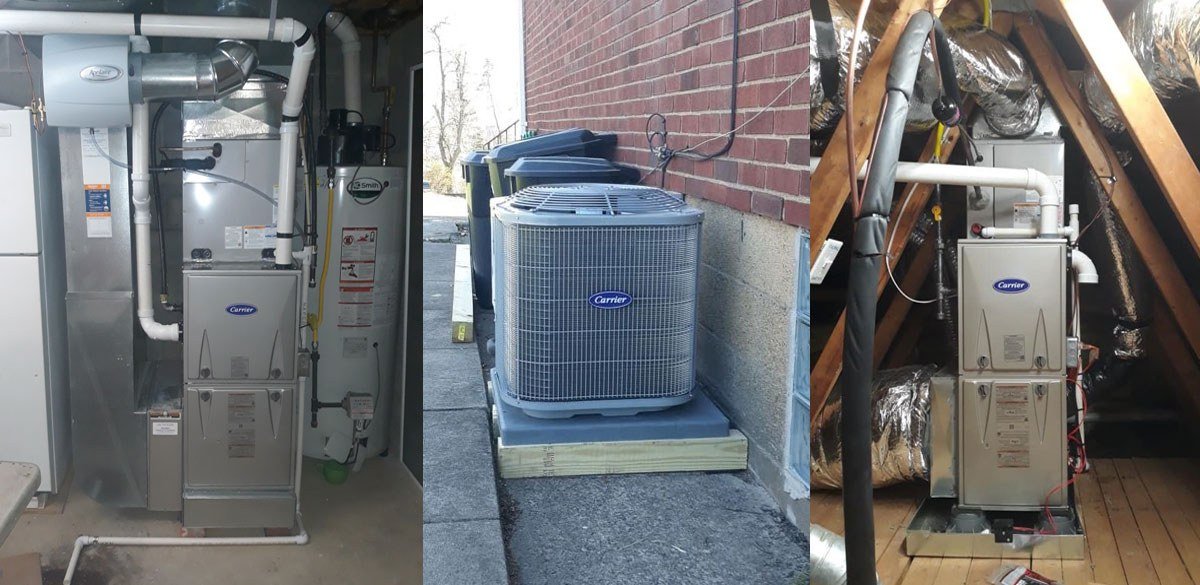
Gas Furnace Installation and Repair in Pittsburgh, PA
Overview
Whether your furnace needs a same-day repair or a full replacement, Gerald assesses your system honestly and walks you through the options before any work begins. Free estimates on installations.
A furnace call starts with a thorough diagnosis — not a guess. Gerald checks heat exchangers, ignition systems, gas pressure, and airflow, then explains what he finds in plain language and shows you the evidence. If replacement makes more sense than repair, the estimate covers equipment, labor, and any code-required permits specific to your Pittsburgh municipality, so there are no line items that appear after the fact. Installations use Carrier high-efficiency equipment sized to your home's actual load, not a generic square-footage estimate.
What's included
- Free installation estimates
- Same-day emergency repair
- Permit coordination included
- All brands serviced
When Pittsburgh temperatures drop into the single digits and your furnace stops keeping up, you need someone who can diagnose the problem accurately and give you a straight answer on whether a repair makes sense or whether it is time to replace the equipment. Weidner Heating & Air Conditioning installs and services gas furnaces throughout the Pittsburgh area, working with homeowners who are tired of patching aging systems and want honest guidance on what actually fixes the problem long-term.
Gerald handles everything from installing new Carrier variable-speed and multi-stage furnaces to diagnosing failed heat exchangers, ignitors, draft inducers, and control boards on systems of any brand. If your furnace is running but cycling short, blowing cold air, or struggling to hold temperature during a cold snap, that is exactly the kind of call worth making before a small issue becomes a mid-January breakdown.
What a Gas Furnace Diagnosis and Installation Actually Covers
On a repair call, Gerald starts with a thorough diagnostic rather than a parts swap. That means checking combustion, measuring temperature rise across the heat exchanger, testing the pressure switches and safety controls, and looking at the flue and venting for anything that affects both efficiency and carbon monoxide safety. You will get a clear explanation of what failed, why it failed, and what a repair costs versus what a replacement would cost over the next several years. On an installation, the work covers equipment selection based on your home's actual heat load, ductwork evaluation, proper sizing of the new unit, flue and gas line connections, and a full startup and airflow verification before Gerald leaves the job. Carrier variable-speed models get particular attention during commissioning because the efficiency gains only show up when the static pressure and airflow are set correctly for your specific duct system.
Signs Your Furnace Needs Attention Before Winter Hits Hard
A furnace that struggles to reach setpoint on a 20-degree night is telling you something. So is one that short-cycles, makes a loud bang on startup, or has been running without a tune-up for three or more years. If your gas bills jumped this past winter without a change in usage habits, that is often a sign of declining combustion efficiency rather than just rate increases. Furnaces older than 15 years that need a repair costing more than half of a replacement system's price are almost always better replaced, especially when newer equipment qualifies for federal tax credits and utility rebates on high-efficiency models. If you are not sure which situation you are in, that is precisely what a diagnostic visit is for.
What Older Pittsburgh Housing Stock Means for a Furnace Job
More than 70 percent of Pittsburgh homes rely on natural gas heat, and a significant share of those systems are in basements that were not designed with easy equipment access in mind. Tight utility spaces, asbestos pipe insulation on older supply lines, undersized return ductwork, and flue systems shared with water heaters are common complications in pre-1960 construction, which makes up a large portion of the housing stock across the city and in neighborhoods like Sewickley where older homes sit alongside newer builds. In North Hills, ranch-style and split-level homes from the 1960s and 1970s often have ductwork layouts that need adjustment when upgrading to a variable-speed system. Gerald understands these local conditions and will flag retrofit requirements in a written estimate before work begins, so there are no cost surprises after the equipment is on the truck. Weidner is licensed, insured, and pulls the required permits for Pittsburgh and Allegheny County, which means your installation passes inspection and your homeowner's insurance stays intact.
What to Expect When You Call
Gerald offers free estimates on installations and comes out to look at your setup in person before quoting a price. You will get a line-item breakdown covering equipment, labor, any ductwork modifications, and permit fees so you can see exactly what you are paying for. Scheduling is straightforward, and Gerald works around your availability rather than giving you a four-hour window and hoping for the best. On installations, most jobs are completed in a single day. On repair calls, if a part needs to be ordered, you will know the timeline and cost before anything is authorized. Financing is available for qualifying full-system replacements, which matters when a furnace fails in February and replacement was not in the budget.
Pricing
Call for a free estimate
Pricing is confirmed during your initial consultation and may vary based on your specific situation and scope of work.
Request a Free Estimate (412) 931-7300Common questions
- Will you recommend a repair or push me toward a full replacement?
- The recommendation depends on the age of your furnace, the cost of the repair, and whether the underlying equipment is still efficient enough to justify keeping it. Gerald will show you what failed, explain the repair cost versus the estimated remaining lifespan of the unit, and give you both options in writing. There is no financial incentive to push one direction over the other — the goal is a recommendation you can actually trust.
- Can you work on my existing furnace even if it is not a Carrier?
- Yes. Gerald diagnoses and repairs gas furnaces of any brand, including Lennox, Trane, Rheem, Bryant, and older systems without easily available parts. NATE certification covers the diagnostic and repair work regardless of manufacturer, so you do not need to switch brands just to get service.
- How long does a gas furnace installation take, and will I be without heat overnight?
- Most single-furnace installations are completed in one day, so you typically have heat running before the technician leaves. If your job involves ductwork modifications or an unexpected venting issue, Gerald will tell you upfront how the schedule changes and what to expect.
- What size furnace do I actually need, and does it matter if I go bigger?
- Oversizing a furnace is one of the most common installation mistakes and leads to short cycling, uneven heat, higher humidity, and accelerated wear on the heat exchanger. Gerald sizes equipment based on a heat load calculation for your specific home — square footage, insulation, window area, and duct layout all factor in — rather than just matching the capacity of whatever was there before.
- Are there rebates or tax credits available on a high-efficiency furnace installation in Pittsburgh?
- Federal tax credits are currently available on qualifying high-efficiency gas furnaces under the Inflation Reduction Act, and Peoples Natural Gas and Duquesne Light periodically offer equipment rebates for Pittsburgh-area customers. Gerald can tell you which Carrier models qualify and how to file for the credits at the time of your estimate, so you are not leaving money on the table.
Ready to Sort Out Your Heating or Cooling
Call Weidner Heating & Air Conditioning to schedule a free estimate or same-day service, and Gerald will walk through your system personally before recommending anything.